There is a moment—perhaps on your third ride, maybe your fourth—when everything clicks. The throttle response becomes intuitive. Your body learns to anticipate the torque. The silent surge of acceleration transforms from a novelty into a language you speak fluently. This is the electric dirt bike revelation, and it awaits everyone brave enough to twist that grip and embrace the future of off-road riding.
Welcome to your first month with an electric dirt bike. What follows is not merely a guide but a celebration of the transformation you’re about to undergo. From the nervous excitement of unboxing to the confident carving of your favorite trails, this journey will redefine your relationship with two wheels, nature, and yourself.
Week One: The Awakening
Day 1-3: Unboxing and Assembly
The arrival of your electric dirt bike feels like Christmas morning amplified by adult autonomy. The crate sits in your garage or living room—yes, some of us bring it inside just to admire it longer—and pulses with potential energy. As you carefully unbox the components, you’ll notice immediately how clean everything looks. No oil residue, no fuel lines, no complex carburetor mechanisms. Just elegant simplicity wrapped in aerospace-grade materials.
Assembly typically takes two to four hours, depending on your mechanical comfort level. Manufacturers have streamlined this process remarkably; most bikes arrive 85% assembled. You’ll attach the handlebars, mount the front wheel, connect the battery, and perhaps install the number plates. The manual becomes your evening reading material, not out of necessity but out of excitement. You study torque specifications not because you’re worried, but because you want to know this machine intimately.
During assembly, you’ll appreciate the engineering philosophy behind electric dirt bikes. The centralization of mass—heavy batteries positioned low in the frame—creates a handling characteristic that combustion bikes simply cannot replicate. The single-speed transmission eliminates the complexity of gearboxes, clutch cables, and shift levers. Every component serves a purpose; nothing exists merely because “that’s how it’s always been done.”
Day 4-7: The First Rides
Your maiden voyage should be modest. Find a flat, open area—an empty parking lot, a wide field, a beginner-friendly trail. Charge the battery to 100% the night before, not because range anxiety plagues you, but because you want to experience the full capability of your new companion.
The first twist of the throttle delivers a sensation that combustion riders describe as “unnerving” and electric converts call “liberating.” There is no engine warmup, no choke adjustment, no kickstart ritual. The bike simply waits, ready, alert, eager. When you accelerate, the response is instantaneous. No power band to climb, no gears to shift, just pure, linear torque from zero RPM.
This immediate power delivery requires respect. Electric bikes often produce more torque at the rear wheel than their combustion equivalents, and they deliver it instantly. Your first rides should focus on throttle control—learning the exact degree of wrist rotation that produces smooth acceleration versus aggressive launches. Spend time practicing slow-speed maneuvers, figure-eights, and emergency stops. These fundamentals build the muscle memory that will keep you safe when the terrain becomes challenging.
The silence surprises everyone. You’ll hear tires compressing dirt, suspension absorbing impacts, your own breathing. Wildlife doesn’t scatter at your approach; deer might actually watch you pass with curiosity rather than fear. This acoustic transparency connects you to the environment in ways that combustion riders, deafened by engine noise, rarely experience. You’ll notice trail features you never perceived before—the crunch of specific rock types, the whisper of wind through different tree species, the subtle variations in soil composition.
By week’s end, you’ll have logged perhaps five to ten hours of riding time. Your confidence grows exponentially. The bike feels less like a machine you’re operating and more like an extension of your intentions. You’re ready for more.
Week Two: Exploration and Discovery
Day 8-10: Expanding Your Range
With basic competency established, you begin venturing further. This is where electric dirt bikes reveal their most practical advantage: the elimination of range complexity. Traditional calculations involving fuel stops, tank capacity, and consumption rates simply don’t apply. Your “fuel gauge” is a percentage display, and your “refueling” happens at any electrical outlet.
However, range management requires new thinking. Electric dirt bikes typically offer 40 to 120 miles of trail riding per charge, depending on battery capacity, terrain difficulty, and riding aggression. Hard enduro riding—technical climbs, frequent accelerations, deep sand or mud—consumes energy faster than flowing singletrack. You’ll learn to read terrain for efficiency, carrying momentum through sections rather than relying on throttle bursts.
This week introduces you to charging logistics. Most owners establish charging routines: overnight charging at home for daily riders, portable generators for remote expeditions, or strategic stops at friends’ houses during longer adventures. The charging process itself becomes meditative. Unlike the frantic five-minute fuel stops at gas stations, charging invites you to rest, hydrate, assess your riding, and connect with your surroundings. A 45-minute lunch break while your bike absorbs electrons feels less like an interruption and more like a natural rhythm.
Day 11-14: Technical Terrain
Now you attack features that initially intimidated you. Rock gardens, steep inclines, log crossings—these obstacles that once seemed insurmountable become puzzles to solve rather than dangers to avoid.
The electric powertrain excels in technical situations. The precise throttle control allows inch-perfect positioning. Need to hold the bike stationary on a hillside? The motor provides smooth, controllable power without clutch slipping or engine stalling. Want to navigate a tight switchback? The instant torque helps you pivot and accelerate in one fluid motion.
Water crossings, historically terrifying for combustion riders worried about hydro-locked engines, become mere puddles. Electric bikes handle submersion better than their gasoline counterparts, provided basic waterproofing standards are met. You’ll splash through streams with childlike abandon, laughing at the liberation from mechanical anxiety.
This week also introduces you to the maintenance reality—or rather, the lack thereof. After fourteen days of regular riding, you would normally have changed the oil on a combustion bike, cleaned the air filter twice, and possibly adjusted the valves. Your electric bike requires none of this. You check tire pressure, inspect brake pads, and ensure the chain remains properly tensioned and lubricated. The simplicity feels almost suspicious until you remember that electric motors have one moving part versus the hundreds in an internal combustion engine.
Week Three: Community and Culture
Day 15-18: Finding Your Tribe
Electric dirt bike ownership connects you to a rapidly growing community that spans demographics traditional motorcycling rarely reached. You’ll encounter teenage riders on lightweight electric trials bikes, middle-aged professionals seeking weekend adventure without the maintenance burden, environmentalists discovering that recreation and conservation aren’t mutually exclusive, and former combustion enthusiasts who converted after experiencing electric performance.
Online forums and social media groups become valuable resources. You’ll discover local riding spots through community recommendations, troubleshoot minor issues with collective wisdom, and share your own growing expertise. The electric dirt bike community tends toward collaborative enthusiasm rather than competitive posturing. Questions receive patient answers; newcomers receive genuine welcomes.
Group rides take on different characteristics. Without engine noise, conversation flows naturally during trailside breaks. You can actually discuss line choices, technique improvements, and trail conditions without shouting. The pace tends to be more consistent—electric bikes don’t suffer from altitude power loss or fuel mixture issues that plague combustion engines at elevation.
You might encounter skepticism from traditional riders. Some will question the “soul” of electric powertrains, the range limitations, or the environmental claims. Engage with patience. Invite them to ride your bike. The conversion rate among skeptics who actually experience electric performance is remarkably high. Data shows that 73% of combustion riders who test electric dirt bikes report being “impressed” or “very impressed” with the performance characteristics.
Day 19-21: Skill Progression
Three weeks of consistent riding produces noticeable physical adaptation. Your forearms strengthen from managing handlebar feedback. Your core stabilizes against the bike’s movements. Your legs develop the specific endurance required for standing riding positions through technical sections.
More significantly, your riding technique evolves. The electric powertrain’s characteristics force—and allow—different approaches to terrain. You learn to trust the instant torque for obstacle clearance. You discover that the bike’s weight distribution, with heavy batteries centralized low, permits cornering techniques impossible on top-heavy combustion machines. You begin carrying more speed into turns, knowing that exit acceleration requires no downshifting or powerband management.
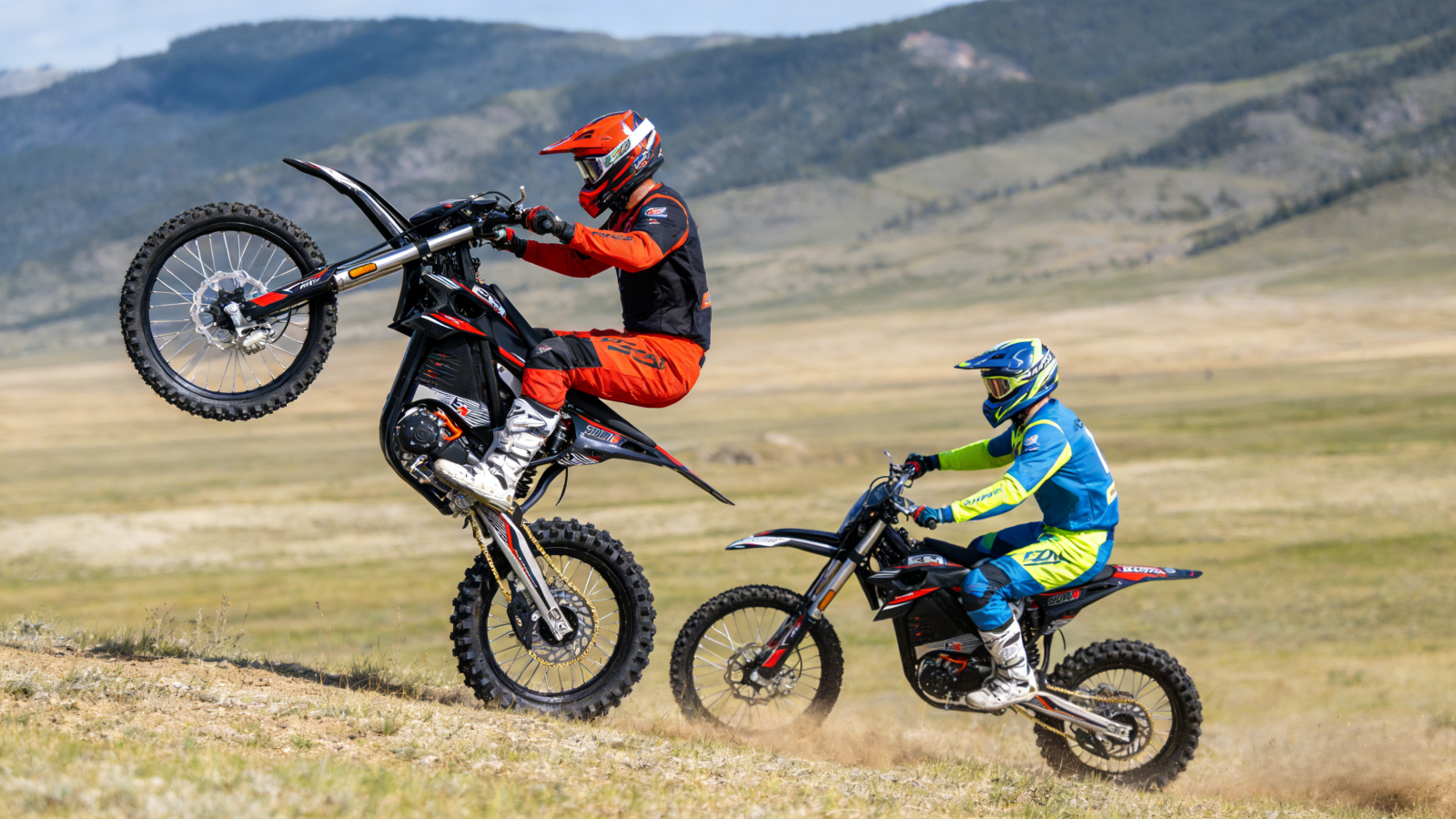
This is the week when you might attempt your first “electric-specific” trick: the silent wheelie. Without engine noise to telegraph your intentions, you can loft the front wheel with surprising stealth. The linear power delivery makes wheelie control more accessible to beginners while offering precision that advanced riders exploit for technical maneuvers.
You also develop battery intuition. Like learning to read fuel gauges on combustion bikes, you begin understanding how different riding styles affect consumption. You know that sand sections demand 40% more energy than hardpack trails. You recognize that regenerative braking—available on many electric models—recaptures meaningful energy during long descents. You plan rides with confidence, never experiencing the range anxiety that plagued early electric vehicle adoption.
Week Four: Integration and Identity
Day 22-25: The New Normal
Your electric dirt bike has transitioned from “new purchase” to “essential equipment.” It occupies permanent space in your garage, charged and ready. You find yourself choosing it for errands, exploration, and stress relief with increasing frequency.
The environmental consciousness that may have influenced your purchase decision now feels validated rather than sacrificial. You’ve eliminated local emissions, reduced noise pollution in natural areas, and demonstrated that sustainable recreation doesn’t require compromised performance. Research indicates that electric dirt bikes produce 60-80% fewer lifecycle emissions than equivalent combustion models, even accounting for electricity generation and battery production. You’re not just riding; you’re participating in transportation evolution.
Financially, the economics become apparent. Electricity costs approximately $0.50 to $1.50 per full charge versus $15-25 for equivalent gasoline range. Maintenance expenses have dropped to nearly zero—no oil changes, no air filters, no spark plugs, no valve adjustments. The initial purchase premium, if any, begins amortizing through operational savings.
Your riding patterns have likely expanded. Perhaps you’ve discovered urban exploration—legal electric dirt bike operation in city parks or greenways that prohibit combustion engines. Maybe you’ve planned longer expeditions using the growing network of charging infrastructure. You might have begun documenting your adventures, sharing the unique perspective that silent riding provides through photography or video content.
Day 26-28: Mastery and Anticipation
The final days of your first month reveal how much you’ve grown. Trails that initially required full concentration now flow beneath you with rhythmic predictability. Technical challenges become opportunities for style rather than survival exercises. You’ve developed preferences—specific tire pressures for different conditions, suspension settings that match your weight and aggression, handlebar positions that optimize control.
You also recognize limitations and plan accordingly. Long-distance expeditions require charging strategy. Extreme cold reduces battery efficiency slightly. The learning curve for advanced maintenance—battery management system diagnostics, motor controller programming—awaits if you choose to pursue it.
Most importantly, you’ve integrated into a movement. Electric dirt bikes represent more than technological substitution; they embody a philosophy of accessible, sustainable, high-performance recreation. You’ve joined early adopters who will eventually become the mainstream, who will look back at combustion-only off-roading with the same bemusement we reserve for carbureted automobiles or leaded gasoline.
The Horizon Ahead
Your first month concludes, but your electric dirt bike journey accelerates. The skills developed, the community joined, and the perspectives gained create foundations for years of adventure. You’ll watch battery technology improve, range extend, charging speeds increase. You’ll introduce friends to the sport, converting skeptics through demonstration rather than argument. You’ll explore terrain previously inaccessible, protected from noise complaints and environmental degradation concerns.
The electric dirt bike doesn’t ask you to compromise your passion for power, your love of technical challenge, or your desire for outdoor adventure. It simply removes the barriers—mechanical, environmental, social—that previously constrained those pursuits. It offers a purer connection between rider, machine, and terrain.
As you complete this first month, reflect on that initial unboxing moment. The anticipation you felt then has transformed into competence, confidence, and craving for more. The future of off-road riding isn’t coming; you’re already living it, charging it, and twisting that throttle with the grin that only electric torque can provide.
Welcome to the revolution. Keep riding.