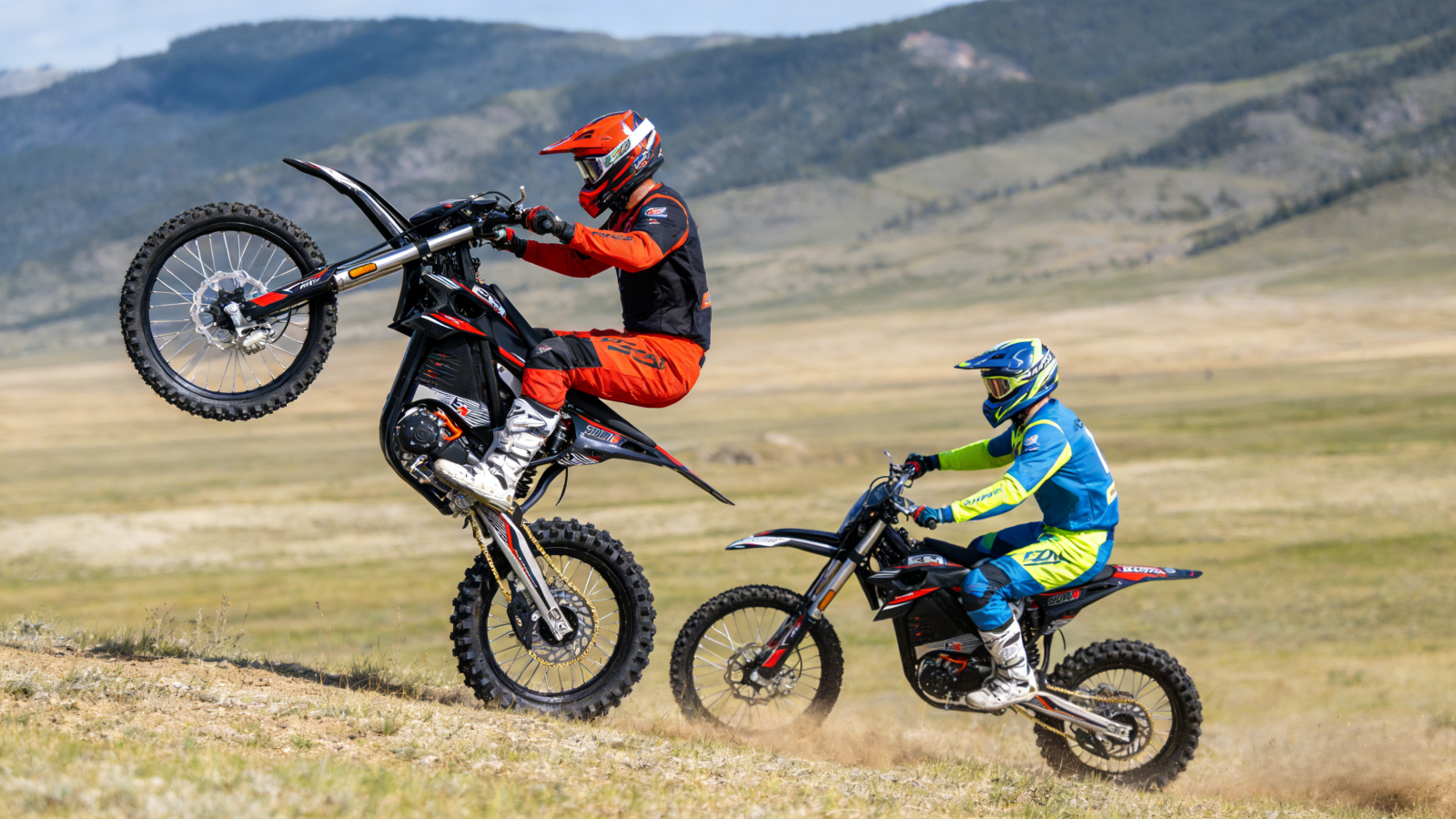
The European Union’s market for adult electric off-road motorbikes is undergoing a seismic shift. Once a niche segment defined by the roar of internal combustion engines, the terrain is now being conquered by the silent, instantaneous torque of electric powertrains. Driven by a potent combination of technological advancement, evolving consumer preferences, and a stringent regulatory push towards sustainability, electric off-road bikes are transitioning from curiosities to serious contenders. This report analyses the current state of the market across key European nations—France, Germany, Italy, the Netherlands, Poland, and the Czech Republic—evaluates the inherent advantages of the technology, profiles the leading brands, and forecasts the trends that will define the quest for the best off-road electric motorbike in Europe by 2026.
Current Market Development Across Key EU Nations
The adoption and development of electric off-road motorbikes are progressing at different speeds across Europe, influenced by local riding culture, topography, purchasing power, and regulatory support.
- France: France is a frontrunner, boasting a vibrant off-road culture (Enduro, Motocross) and strong government incentives for electric vehicles. The country’s diverse terrain, from alpine trails to forests, provides ideal testing grounds. French consumers are notably eco-conscious, driving demand for silent, emission-free trail riding. Local events increasingly feature “zero emission” categories. The market is characterised by a high interest in performance-oriented brands and a growing network of dealers specializing in electric mobility for recreation.
- Germany: As Europe’s largest economy and engineering powerhouse, Germany is a critical market. German riders value technology, precision, and performance. The market here is discerning, with a strong emphasis on build quality, after-sales service, and technical innovation. While traditional off-road strongholds exist, access to riding areas is a challenge, making the quiet nature of e-bikes a significant advantage for accessing less controversial trails. German engineering is also heavily involved in the supply chain, particularly in battery management and motor design.
- Italy: The home of legendary motorcycle passion, Italy presents a fascinating mix of tradition and gradual electrification. The entrenched culture around petrol-powered motocross and enduro is strong. However, younger riders and those seeking urban-to-trail versatility are showing growing interest. Italian manufacturers are keenly observing the trend, with some starting to electrify their off-road line-ups. The market is nascent but poised for growth, especially for dual-sport models that can navigate both city streets and country paths.
- ** Netherlands:** The Netherlands, with its limited natural off-road terrain but massive density of cyclists and EV adoption, presents a unique case. The focus is less on high-powered motocross and more on lightweight, trail-oriented, and recreational off-road bikes. There is significant interest in electric motorbikes for use on private land, forest trails, and for motocross training at dedicated circuits where noise regulations are strict. The Dutch market is highly receptive to innovative, design-focused, and practical electric solutions.
- Poland & Czech Republic: Central and Eastern Europe, represented here by Poland and the Czech Republic, are emerging markets with high growth potential. Both countries have a deep-rooted motorcycle culture and extensive natural areas ideal for off-roading. Price sensitivity is higher, but there is enthusiastic interest in new technology. These markets are key targets for more affordable brands and are likely to be major growth drivers post-2025 as prices decrease and second-hand e-bikes become available. Local distributors are aggressively expanding their portfolios of electric off-road models.
The Inherent Advantages & Characteristics of Electric Off-Road Motorcycles
The shift to electric is not merely regulatory compliance; it offers tangible benefits that redefine the off-road experience:
- Instantaneous Torque & Linear Power Delivery: Electric motors deliver 100% of their torque from zero RPM, providing explosive acceleration out of corners and unparalleled tractability on steep, technical climbs. The linear, controllable power band makes bikes easier to handle for beginners and more precise for experts.
- Silent Operation: This is a game-changer for trail access. Riders can explore nature without disturbing wildlife or communities, helping to preserve riding areas often threatened by noise complaints. It also allows for training at unconventional hours and locations.
- Reduced Maintenance: The drivetrain is drastically simplified—no engine oil, filters, coolant, complex gearboxes, or clutches to service. Maintenance revolves around the chassis, brakes, and battery care, significantly reducing long-term running costs and complexity.
- Lightweight & Centralised Mass: While battery packs are heavy, the overall mass can be concentrated low and centrally. Advanced designs achieve excellent balance and a feeling of agility, especially beneficial in technical terrain.
- Rideability & Customization: With no gears to shift and often customizable power maps (e.g., eco, trail, sport modes), riders can focus entirely on line choice and body position. Regenerative braking can also add stability on descents.
- Environmental Credentials: Zero tailpipe emissions align perfectly with the environmental values of many modern outdoors enthusiasts and corporate sustainability goals.
Market Leaders and Brand Landscape
The market is segmented into dedicated electric pioneers, established OEMs transitioning from petrol, and performance-focused specialists.
- Electric Pioneers & Market Leaders:
- Zero Motorcycles (USA): A long-standing leader, offering the FX platform as a highly configurable dual-sport/off-road bike. Known for robust technology, decent range, and a mature dealer network in Western Europe.
- Energica (Italy): Primarily known for high-performance street bikes, but their Experia model, while adventure-focused, showcases the Italian capability in premium electric powertrains that could trickle down to pure off-road.
- Stark VARG (Sweden): The current disruptor. The VARG took the motocross world by storm with its astounding claimed 80 hp, adjustable power curves mimicking any 2-stroke or 4-stroke, and lightweight chassis. It is the benchmark for performance in 2024-2025 and a direct contender for “best in class” in competitive off-road.
- Established OEMs Entering the Fray:
- KTM (Austria): A dominant force in petrol off-road, KTM has launched the Freeride E-XC and is heavily investing in its electric future. Leveraging its vast R&D and dealer network, KTM aims to translate its performance pedigree into electric. The 2026 model years are expected to show significant leaps.
- Husqvarna (Sweden/Austria): Sister brand to KTM, offering the EE 5 for youth and with prototype adult models sighted. Its approach will combine KTM’s tech with Husqvarna’s distinct Scandinavian design.
- Other Japanese/European Majors: Yamaha, Honda, and Pierer Mobility group brands (GasGas) are all in active development. Their entries, expected around 2025-2026, will bring scale, brand loyalty, and potentially more accessible price points.
- Specialist & Niche Brands:
- Cake (Sweden): Focuses on minimalist, lightweight, and sustainable electric motorcycles like the Kalk OR for off-road. Appeals to a design-conscious and environmentally focused rider.
- Sur-Ron (China): A major force in the lightweight, more affordable segment (Light Bee series). Popular among younger riders and for recreational use. Its success highlights the demand for accessible entry points.
- Various Start-ups: Numerous smaller European startups are pushing boundaries in specific areas, such as ultra-lightweight trail bikes or extreme performance.
Government Policy: The Crucible of Change
EU policy is the primary accelerator for electrification:
- Euro 5/Upcoming Euro 6: Stringent emissions standards make developing new small-bore ICE off-road engines increasingly costly and complex, pushing OEMs to invest in electric alternatives.
- Green Deal & Fit for 55: The overarching goal of climate neutrality by 2050 and a 55% GHG reduction by 2030 filters down to all transport sectors, including recreational vehicles.
- National Incentives: While direct purchase subsidies for electric motorbikes are less common than for cars, countries like France offer bonuses. More impactful are local regulations: noise restrictions, emissions zones in cities (affecting dual-sport use), and the potential for access to trails in nature reserves being granted only to zero-emission vehicles—a policy already debated in several regions.
- Type-Approval Regulations: The evolving EU vehicle type-approval framework for L-category vehicles is increasingly factoring in electric powertrains, setting safety and performance standards that will shape future designs.
Future Trends: The Road to 2026 and Beyond
- The Performance Parity Milestone: By 2026, the “best” electric off-road bikes will have decisively surpassed equivalent ICE bikes in key performance metrics: power-to-weight ratio, torque, and lap times on a motocross track. The debate will shift from “if” they are competitive to “which one” is best.
- The Battery Revolution: The next 2-3 years will see incremental but crucial improvements:
- Energy Density: Longer ride times (moving from ~1-2 hour typical use to 2-3+ hours for serious trail riding) will be the holy grail.
- Charging Infrastructure & Speed: Fast-charging capability (to 80% in 30 mins or less) at tracks and trailheads will become a standard demand.
- Battery Swapping: While logistically challenging, some brands or track facilities may experiment with swap-station models to eliminate range anxiety completely for closed-circuit use.
- Market Segmentation & Specialization: The market will mature into clear segments:
- High-Performance MX/Enduro: Led by Stark VARG, KTM, and others, focused on professional and amateur racers.
- Trail/Recreational: Lightweight, user-friendly bikes with moderate power and maximum fun, from brands like Cake, Sur-Ron, and future entries.
- Adventure/Cross-Global: Longer-range, more robust bikes capable of mixed-surface travel, a segment yet to be fully defined but with huge potential.
- The Rise of the “Connected” Dirt Bike: Advanced software will be a key differentiator. Customizable power maps, traction control, regenerating braking settings, and detailed ride data analytics via smartphone apps will be standard on premium models.
- Consolidation & Partnerships: The capital-intensive nature of EV development will drive partnerships between startups and major OEMs, or lead to acquisitions. Supply chain stability for batteries and motors will become a key competitive advantage.
- Secondary Market & Sustainability: As first-generation e-bikes age, a secondary market will emerge. The industry will need to address and publicize battery recycling and second-life programs to reinforce its environmental credentials and manage total cost of ownership.
Conclusion
By 2026, the title of “Best Off-Road Electric Motorbike in Europe” will be hotly contested across different categories. It will likely be a bike that successfully integrates cutting-edge battery technology delivering 2+ hours of aggressive riding, blistering and tunable performance, robust connectivity, and is supported by a brand with a reliable dealer and service network. While pioneers like Stark VARG currently set the performance bar, the entry of established giants like KTM and Yamaha will bring new levels of refinement, scale, and competition.
The convergence of undeniable performance benefits, reduced lifetime costs for enthusiasts, and an inexorable regulatory push towards zero emissions is creating an irreversible trend. The EU market, with its diverse landscapes and progressive policies, will be a global epicenter for this revolution. The sound of the future off-road is not a roar, but the hum of torque and the whisper of tires on earth—a change that promises to preserve both the sport and the environments in which it is enjoyed.
Related searches for Electric Dirt Bikes for adults