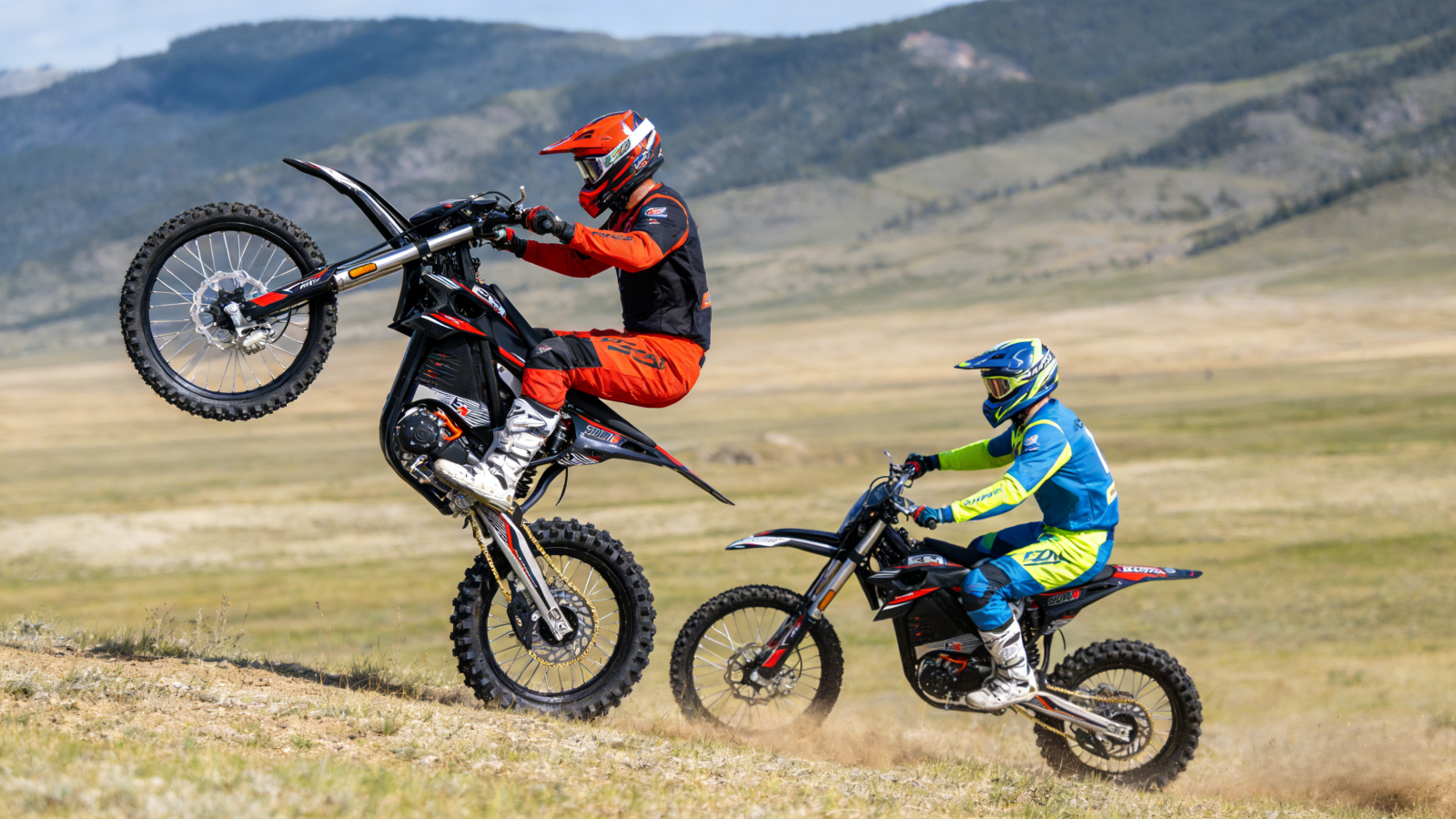
Remember the first time you kicked a dirt bike to life? The smell of petrol, the explosive roar of the engine, the vibration through your boots. For decades, that was the sacred symphony of motocross. But step into a modern paddock now, and you’ll hear a new sound—or rather, a lack of one. Amidst the familiar two-stroke screams, there’s a new contender slicing through the air: the high-pitched whirr of an electric motor. And it’s not just a whisper; it’s a statement.
The future of motocross is electric. And before you dismiss it as a quiet, wimpy alternative for tree-huggers, I urge you to look closer. The proof isn’t in glossy brochures or distant promises. It’s here, right now, in the dirt, on the tracks, and in the hands of riders who’ve made the switch and won’t look back.
Let me tell you about my first real ride on a modern electric motocross bike. I geared up with the usual skepticism. No clutch lever? No gearbox? This felt like cheating, or at the very least, a simplified toy. Then I twisted the throttle.
The sensation wasn’t a build-up; it was an instantaneous eruption. The bike launched forward with a ferocity no gas bike could match. Zero lag, 100% torque from the first millisecond. Hitting a sandy uphill section, where a gas bike would need precise clutch work and momentum, the e-bike just… powered up. Smoothly, relentlessly, and in eerie silence. The only sound was my own startled laughter inside my helmet. That’s when I knew: this isn’t just different. This is revolutionary.
The Proof is in the Present: No Longer a “Concept”
We need to stop calling electric motocross bikes “the future.” They are the present. Companies like Alta Motors (though now defunct, they lit the fuse), Sur-Ron, and KTM with its Freeride E-XC blazed the trail. But the real game-changers are hitting the market now.
Take Stark VARG. This isn’t a watered-down experiment. It’s a purpose-built, race-ready machine that’s beating gas bikes in head-to-head tests. With over 80 horsepower (the equivalent of a 450cc beast), tunable power curves via a smartphone app, and a weight comparable to its gas counterparts, it obliterates the old arguments about power and performance.
Or look at Edgemoto, crafting high-performance trials bikes that are dominating competitions because their precise, instant throttle response gives riders superhuman control.
This isn’t niche anymore. Major manufacturers are all-in:
- Honda has patents and prototypes circulating.
- Yamaha has its TY-E trials bike and is heavily invested in electric development.
- GasGas and Husqvarna, under the KTM umbrella, have electric models in their lineups.
The proof? They’re investing billions. They see the data. They see the demand.
The Technical Edge: Why Electric is Superior for MX
The advantages of electric power aren’t just incremental; they redefine the sport’s mechanics.
- The Torque Curve (or Lack of Curve): A gas engine has a powerband—a sweet spot of RPM where it makes good power. Miss it, and you’re bogging or screaming. An electric motor delivers maximum torque instantly, from 0 RPM. This means explosive starts, impossible hill climbs, and traction that feels like black magic. You exit corners not by fanning a clutch, but by simply pointing and shooting.
- The Weight Distribution Revolution: The heaviest component, the battery pack, sits low and central in the frame. This creates an incredibly low center of gravity. The bike feels planted, agile, and flicks side-to-side with less effort. It’s less tiring to ride and more forgiving when things get sketchy.
- The Tuning Revolution – An App for Everything: Forget jetting kits and exhaust swaps. Your phone is now your mechanic. Want a smooth, linear power curve for technical trails? Tap. Want a violent, all-or-nothing map for supercross? Tap. Want to limit power for a beginner? Tap. The customizability is infinite and instant.
- The Maintenance Miracle: The list of parts you don’t need is staggering: No engine oil, filters, or coolant. No spark plugs, pistons, or valves to adjust. No clutch plates to burn out. No complex gearbox. No carburetor or fuel injectors to clean. Maintenance shrinks to checking brakes, tires, suspension, and keeping the battery charged. The cost and time savings are monumental.
The Rider Experience: A Pure, Unfiltered Connection
This is the most profound proof. Strip away the noise, the vibration, the heat, and the mechanical complexity, and what’s left? A pure connection between you, the bike, and the terrain.
- You Hear Everything: You hear the tires gripping and sliding, the suspension working, the dirt hitting the fender. This sensory feedback makes you a better, more aware rider.
- You Ride More: Practice in your backyard? No problem. Early morning sessions without waking the neighborhood? Done. Indoor tracks and urban training facilities become viable. The accessibility skyrockets.
- The Learning Curve Vanishes: New riders aren’t intimidated by stalling, clutching, or shifting. They learn balance, body position, and throttle control—the core skills—in their first session. The sport becomes more welcoming.
The Unbeatable Arguments: Cost & Environment
Let’s talk practicality.
The True Cost of Ownership: Yes, the upfront cost of a top-tier e-MX bike is high (comparable to a premium gas bike). But the operating cost is pennies. A full “tank” of electricity costs a fraction of a gallon of premium fuel. The aforementioned lack of engine maintenance saves hundreds per year. No more $1000+ engine rebuilds.
The Environmental & Social License to Ride: This is critical. Riding areas are disappearing. Noise complaints are the #1 killer of local tracks. An electric bike is radically quieter and produces zero emissions at the point of use. It gives us a powerful argument to preserve and even create new riding spaces. We can be stewards of the outdoors we love to ride in.
The Challenges (The Honest Part)
The future isn’t perfect, and acknowledging the hurdles is part of the proof that this is a real, evolving technology.
- Range & Ride Time: This is the big one. Current bikes offer 1-2 hours of hard moto, less for pro-level pacing. For a day at a remote trail network, it’s a limitation. But for most motocross track sessions (which are typically 15-30 minutes at a time), it’s ample. The technology is improving rapidly.
- Charging Infrastructure: At a national track with no outlets, you need a generator or a powerful portable battery system. This is a logistical shift, not a deal-breaker.
- The Sound of Soul: For many, the roar of an engine is irreplaceable. It’s an emotional anchor. This is a cultural shift we must navigate. The new “sound” of motocross will be the buzz of competition, the cheers of the crowd, and the stories told afterward.
The Future-Proof Future: What’s Next?
The trajectory is clear and accelerating.
- Battery Tech: Lighter, denser batteries will extend range and shrink weight. Solid-state batteries are on the horizon.
- Swap & Go: Standardized, swappable battery packs could mean pit stops for a fresh “tank” in seconds, solving the range issue for long days.
- AI & Integration: Imagine bikes that learn your riding style and adjust power delivery automatically, or that can map a track and optimize power output per section.
- New Forms of Sport: Without noise constraints, we could see urban motocross events, incredible indoor stadium designs, and formats that focus purely on rider skill and athleticism.
The Conclusion: The Starting Gate Has Dropped
The proof is not in a single spec sheet or a viral video. It’s in the collective evidence:
The performance proof is in the instant torque and lap times.
The technical proof is in the simplified, tunable design.
The practical proof is in the lower cost and silent operation.
The experiential proof is in the grin on every first-time rider’s face.
The electric motocross bike is not a replacement. It’s an evolution. It removes barriers between the rider and the ride. It preserves our right to ride. It opens the sport to a new generation.
The future isn’t coming. It’s sitting in a paddock near you, humming quietly, waiting for you to twist the throttle and feel what happens next. The starting gate has dropped. The question is no longer “if,” but when will you join the revolution?
The proof is in the dirt. Go get some.
Related searches for Electric Dirt Bikes for adults