For decades, the roar of petrol engines has been the soundtrack of desert adventure across the Arabian Peninsula. From the sweeping dunes of the Rub’ al Khali to the rocky wadis of Oman, off-road motorcycling has been a cherished pursuit—a blend of adrenaline, skill, and communion with some of the world’s most dramatic landscapes. Yet a quiet revolution is underway. Across the Middle East, the familiar thunder of two-stroke and four-stroke engines is increasingly being replaced by the near-silent hum of electric motors. This is not merely a niche trend among environmentalists; it is a fundamental transformation driven by government policy, technological advancement, and a new generation of riders seeking a different kind of desert experience.
A Region Primed for Change
The Middle East’s embrace of electric dirt bikes is rooted in a confluence of factors unique to the region. Governments across the Gulf Cooperation Council (GCC) are aggressively pursuing economic diversification and sustainability goals. The UAE, for instance, has set a target for electric vehicles to constitute 25% of all vehicles on its roads, backed by a $1.5 billion investment in electric vehicle infrastructure. Saudi Arabia’s Vision 2030 similarly prioritizes the modernization of transportation and the diversification of mobility options. These are not merely aspirational statements; they are translating into tangible policy measures, including financial incentives for electric vehicle purchases, investments in charging networks, and regulatory frameworks designed to encourage adoption.
The region’s rapid urbanization further fuels this shift. With urban populations projected to reach 90% in the GCC, cities like Dubai and Riyadh are investing over $10 billion in smart mobility initiatives. Electric dirt bikes, with their compact form factor and zero emissions, are emerging as an ideal solution for urban commuting and last-mile logistics, while their off-road capability satisfies the enduring appeal of desert recreation. This dual-purpose utility is a key driver of market growth, which is already valued at $1.2 billion in the GCC alone.
Why Electric? The Desert Advantage
The transition from petrol to electric is not just about environmental responsibility; for many riders, it’s about superior performance in the unique conditions of the Middle East. Electric dirt bikes offer several compelling advantages that are particularly relevant for desert terrain.
Instant Torque and Desert Agility
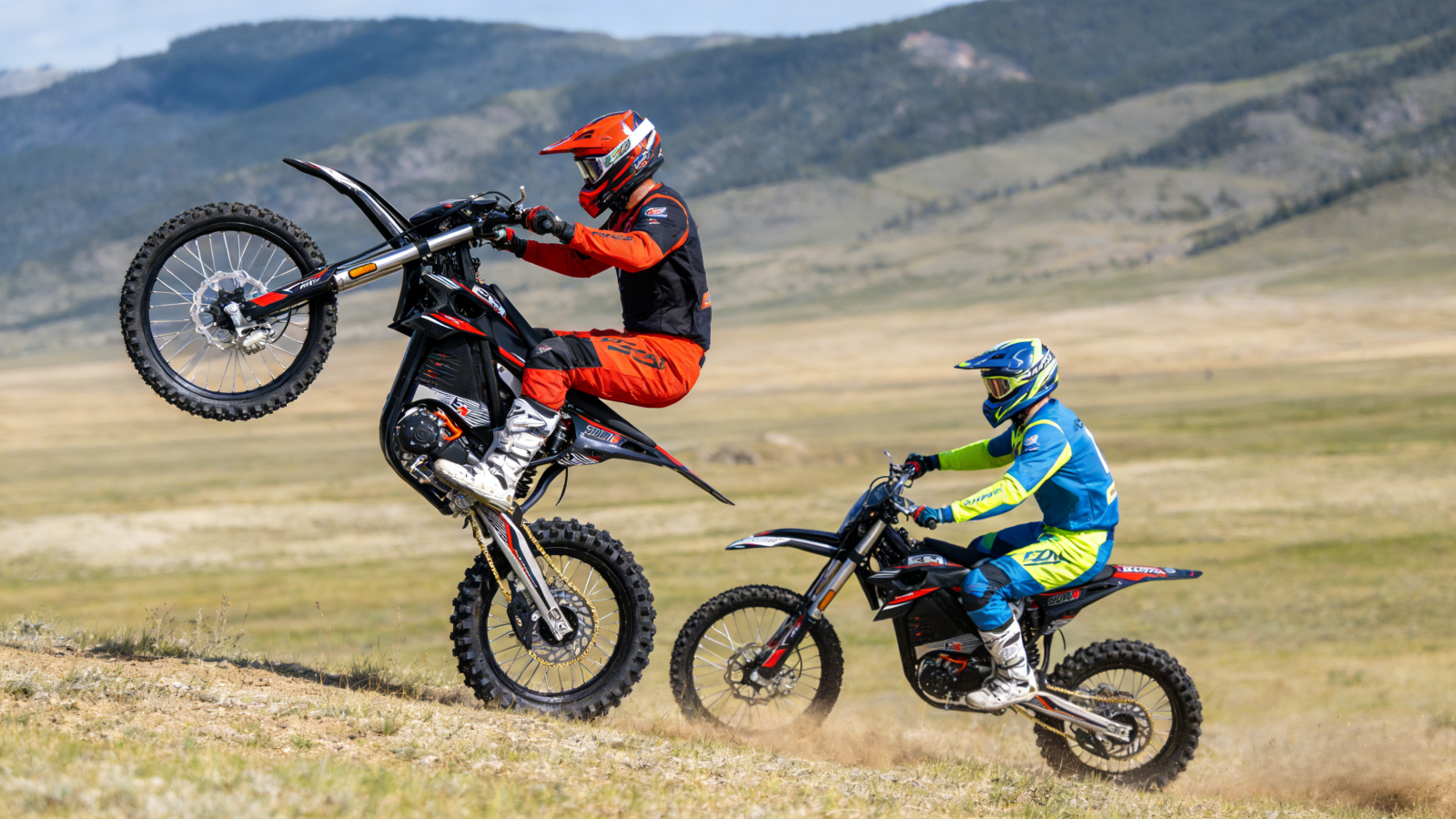
Perhaps the most celebrated advantage is the instant torque delivery of electric motors. Unlike internal combustion engines that require revving to reach peak power, electric motors deliver 100% of their torque from zero RPM. This translates to explosive acceleration and precise throttle control, which is invaluable when navigating soft sand or climbing steep dunes. Models like the Surron Ultra Bee achieve 0-50 km/h in just 3.5 seconds, offering a responsiveness that petrol bikes struggle to match. This instant power allows riders to conquer 35-degree inclines with confidence and maneuver through technical sections with unprecedented ease.
Quieter Rides, Longer Access
The near-silent operation of electric motors is another game-changer. In a region where noise sensitivity is high, the quiet hum of an electric dirt bike—typically around 55 decibels compared to 98 decibels for a 250cc petrol equivalent—is a significant advantage. This not only enhances the rider’s experience, allowing them to appreciate the sounds of the desert, but also reduces the impact on local communities and wildlife. For riders, quieter operation means access to trails that might be off-limits to noisier petrol bikes, opening up new areas for exploration.
Lower Maintenance, Higher Reliability
The simplicity of electric motors translates directly to lower maintenance costs and greater reliability. With fewer moving parts, there are no oil changes, air filter replacements, or complex valve adjustments to worry about. A typical electric dirt bike might cost around $50 per year in maintenance, compared to over $300 for a comparable petrol bike. The cost of electricity for charging is also a fraction of what it costs to fill a petrol tank, making electric bikes significantly cheaper to run. Furthermore, modern electric dirt bikes are increasingly equipped with advanced thermal management systems, including liquid cooling and MOSFET controllers rated up to 125°C, ensuring they can handle the extreme summer temperatures of the Middle East without performance degradation.
The Player: Surron’s Dominance
While several brands are competing for a slice of the Middle Eastern market, one name stands out: Surron. The Chinese manufacturer has established itself as the dominant player in the region, particularly through its official distributor, Surron Dubai, which is recognized as the sole authorized dealer for the UAE. Surron’s success is built on a combination of performance, value, and critically, local support.
The Light Bee X: An Entry Point for Many
The Surron Light Bee X is the brand’s entry-level model, yet it offers performance that rivals many petrol counterparts. With a 5000W brushless motor that peaks at 20kW, it reaches a top speed of 85 km/h and offers a range of up to 135 km per charge. Its lightweight 63 kg frame makes it exceptionally maneuverable, a key attribute for beginners and experienced riders alike. The Light Bee X features app-controlled diagnostics and a liquid-cooled controller that prevents overheating during prolonged desert rides, a crucial feature for UAE conditions.
The Ultra Bee: For the Serious Enthusiast
For those seeking maximum power, the Surron Ultra Bee delivers a staggering 12,500W peak power, rivaling 250cc petrol dirt bikes. Its advanced suspension and thermal management system are specifically engineered for the UAE’s challenging terrain and extreme heat. The Ultra Bee maintains full motor output even when ambient temperatures reach 50°C, a threshold that competitors often cannot match.
The Importance of Local Support
Surron’s dominance is not solely due to its products but also its strategic partnership with Surron Dubai. The distributor offers a comprehensive service ecosystem, including a dedicated service center, access to genuine parts, firmware updates, and a community of riders. For riders investing significant sums in electric mobility, this local support is invaluable. It ensures fast repairs, specialized maintenance for regional conditions, and confidence that the bike will be reliable even in remote desert areas. As Surron Dubai states, their “unmatched support, warranty, test rides, upgrades, and rider training” sets the benchmark for service in the region.
Other Contenders: A Growing Field
While Surron leads the pack, other brands are also vying for a foothold in the Middle East. Zero Motorcycles and KTM represent the premium end of the market but face challenges in the desert environment. Zero’s DSR/X, for instance, weighs 247 kg, which is a significant disadvantage in soft sand where agility is paramount. KTM’s Freeride E-XC suffers from a limited range of just 25-30 km, severely restricting its utility in the vast desert landscapes of the UAE.
Local and alternative brands like Sharmax Motors offer more affordable options, but their support infrastructure is often not as comprehensive as Surron Dubai’s. As the market matures, brands like RFN, Talaria, and E Ride Pro are also entering the fray, but Surron’s established local presence gives it a formidable advantage.
The Regulatory Landscape
The regulatory environment for electric dirt bikes in the Middle East is evolving but remains a crucial consideration for riders and manufacturers alike. In the UAE, electric scooters are legally categorized as motorcycles and require licensing to operate on public roads. The broader region is also grappling with safety standards.
In Saudi Arabia, the SASO Technical Regulation for Motorcycles mandates that all new motorcycles, including electric models, must obtain a Gulf Conformity Certificate. This certification ensures that each model meets stringent safety and emissions standards, covering aspects such as brake performance, lighting, and vehicle identification numbers. The regulation also bans certain categories of motorcycles, including some used imports and children’s models, which helps ensure that only safe and compliant vehicles are on the market. This regulatory clarity, while presenting a barrier to entry for some, is ultimately beneficial as it protects consumers and builds confidence in the growing electric market.
The Future: Greening the Desert
The rise of electric dirt bikes in the Middle East is more than a passing trend; it is a reflection of a broader shift towards sustainable mobility. As government incentives continue to support EV adoption, and as battery technology advances to offer even longer ranges and faster charging, the appeal of electric bikes will only grow. The quiet revolution is well underway, and it promises to make the desert rides of the future quieter, cleaner, and more accessible than ever before.