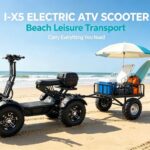

The outdoor recreation industry is undergoing a profound transformation. As environmental consciousness meets technological innovation, a new category of vehicle is emerging at the intersection of sustainability and adventure: the electric ATV scooter. These versatile machines are redefining how we explore natural landscapes, offering a compelling alternative to traditional gas-powered off-road vehicles. Among the pioneering models leading this revolution, the I-X5 Electric ATV Scooter exemplifies the cutting-edge engineering and eco-friendly design that is capturing the imagination of outdoor enthusiasts worldwide.
The Rise of Sustainable Adventure
For decades, off-road recreation has been synonymous with the roar of internal combustion engines, the smell of gasoline, and the environmental impact of carbon emissions. Traditional ATVs, while exhilarating, have long posed challenges for conservation-minded riders and land managers alike. Noise pollution disrupts wildlife habitats, exhaust emissions contribute to air quality degradation, and the ecological footprint of fossil fuel consumption conflicts with the very nature lovers seek to experience.
Enter the electric ATV scooter—a game-changing solution that preserves the thrill of off-road exploration while eliminating the environmental drawbacks. This new breed of vehicle combines the rugged capability of all-terrain vehicles with the clean, quiet efficiency of electric powertrains. The result is an outdoor recreation experience that is simultaneously more immersive and more responsible.
The market response has been remarkable. Industry analysts project the global electric ATV and UTV market to grow from $1.2 billion in 2023 to $4.8 billion by 2030, representing a compound annual growth rate of over 20%. This surge reflects not merely technological advancement, but a fundamental shift in consumer values. Today’s outdoor enthusiasts increasingly prioritize sustainability without compromising on performance or adventure.
The I-X5 Electric ATV Scooter: Engineering Excellence Meets Environmental Stewardship
At the forefront of this electric revolution stands the I-X5 Electric ATV Scooter, a machine that demonstrates how far the category has evolved. The I-X5 represents a sophisticated fusion of scooter agility and ATV durability, engineered specifically for riders who demand both environmental responsibility and uncompromising performance.
Power and Performance Redefined
The I-X5 Electric ATV Scooter challenges preconceptions about electric vehicle capability. Equipped with a robust 3000W brushless motor system, the I-X5 delivers instantaneous torque that rivals or exceeds comparable gas-powered alternatives. This electric powertrain generates consistent power across all RPM ranges, eliminating the lag and gear-shifting interruptions that characterize traditional engines.
What distinguishes the I-X5 in the electric ATV scooter market is its intelligent power distribution system. The dual-motor configuration provides all-wheel-drive capability, ensuring superior traction across diverse terrains—from loose gravel and muddy trails to steep inclines and sandy surfaces. Riders report that the I-X5’s low center of gravity, a natural advantage of battery placement, enhances stability and handling confidence in challenging conditions.
The performance specifications of the I-X5 illustrate the maturity of electric off-road technology. With a top speed of 45 mph and a range extending to 50 miles on a single charge, the scooter accommodates extended backcountry adventures without range anxiety. The 60V 30Ah lithium-ion battery system utilizes automotive-grade cells with advanced thermal management, ensuring consistent performance across temperature extremes while delivering over 1,000 charge cycles before significant degradation.
Silent Exploration: The Sound of Nature Returns
Perhaps the most transformative aspect of the electric ATV scooter experience is the absence of engine noise. The I-X5 operates at approximately 65 decibels—quieter than normal conversation—compared to the 85-100 decibel output of conventional ATVs. This dramatic reduction in acoustic footprint fundamentally alters the relationship between rider and environment.
For wildlife photographers and nature observers, the I-X5 enables approaches impossible with gas-powered vehicles. The silent operation eliminates the “announcement effect” that typically clears areas of wildlife minutes before arrival. Riders report unprecedented proximity to deer, elk, and bird species, creating opportunities for observation and photography that were previously unattainable.
The silence also enhances the psychological benefits of outdoor recreation. The meditative quality of natural soundscapes—wind through trees, water flowing over rocks, birdsong—can now accompany motorized exploration. This sensory integration represents a profound shift in how we experience wilderness, aligning the mechanical means of access with the organic nature of the destination.
Zero-Emission Exploration
The environmental credentials of the I-X5 Electric ATV Scooter extend beyond noise reduction. With zero direct emissions, the I-X5 eliminates the carbon footprint associated with fuel combustion. When charged from renewable energy sources, the vehicle’s operational impact approaches zero—a stark contrast to gas ATVs that typically consume 1-2 gallons of fuel per hour of operation.
Life cycle analysis reveals additional environmental advantages. The I-X5’s simplified mechanical architecture—eliminating engine oil, transmission fluid, coolant, and exhaust systems—reduces maintenance-related waste and pollution. The regenerative braking system recaptures kinetic energy during descents, extending range while reducing brake wear and associated particulate emissions.
For land management agencies and conservation organizations, the adoption of electric ATV scooter fleets represents a pathway to sustainable trail maintenance and patrol operations. The reduced environmental impact supports mission alignment while maintaining necessary access capabilities in sensitive ecological zones.
Transforming Outdoor Recreation Business Models
The emergence of electric ATV scooters is catalyzing innovation across the outdoor recreation industry. Rental operators, adventure tourism companies, and resort properties are discovering that electrification opens new markets and operational efficiencies.
Expanding Market Accessibility
Traditional ATV tourism has faced limitations related to noise restrictions, emissions regulations, and the intimidating nature of powerful gas machines for novice riders. The electric ATV scooter addresses each of these barriers. The I-X5’s multiple riding modes—including a beginner-friendly 15 mph limit and progressive power curves—enable operators to serve customers with varying experience levels confidently.
Urban adventure parks and suburban nature preserves, previously inaccessible to motorized recreation due to noise and pollution concerns, are now viable venues for electric ATV scooter experiences. This geographic expansion democratizes off-road access, bringing adventure opportunities closer to population centers and reducing the travel burden associated with rural destination resorts.
Operational Economics
The business case for electric fleet conversion is compelling. Energy costs for the I-X5 average $0.03 per mile compared to $0.15-$0.20 for equivalent gas-powered vehicles. With fewer moving parts and no engine maintenance requirements, service intervals extend dramatically. The I-X5’s maintenance schedule focuses primarily on brake pads, tires, and battery health monitoring—reducing labor costs and vehicle downtime.
For multi-day backcountry operations, the I-X5’s swappable battery system enables continuous use without charging delays. Operators can maintain charged battery banks at base camps, exchanging depleted units in minutes rather than waiting hours for recharging. This logistical flexibility enhances asset utilization and customer throughput.
Premium Experience Positioning
Forward-thinking operators are leveraging the unique characteristics of electric ATV scooter technology as premium differentiators. “Silent safari” tours, wildlife photography expeditions, and sunrise meditation rides represent experience categories impossible with traditional vehicles. The I-X5’s refined aesthetics and advanced technology appeal to demographics previously disinterested in motorsport recreation—urban professionals, environmental advocates, and wellness-oriented consumers.
Technological Innovation and Future Trajectory
The electric ATV scooter category is advancing rapidly, with the I-X5 representing current capabilities rather than ultimate potential. Emerging technologies promise to further transform outdoor recreation in coming years.
Battery Technology Evolution
Solid-state battery development, already entering commercial production for automotive applications, will eventually migrate to powersports. These systems promise 50% greater energy density than current lithium-ion technology, potentially doubling the I-X5’s range or halving its weight. Faster charging capabilities—targeting 15-minute full charges—will eliminate remaining logistical constraints for commercial operators.
Autonomous and Connected Features
The I-X5’s integrated electronics architecture provides a platform for advanced rider assistance systems. GPS trail mapping, geofencing for restricted areas, and automatic emergency response capabilities enhance safety and regulatory compliance. Future iterations may incorporate terrain-scanning sensors that automatically adjust suspension and power delivery for optimal handling across varying surfaces.
Integration with Renewable Infrastructure
The convergence of electric ATV scooter technology and distributed renewable energy creates opportunities for truly sustainable adventure tourism. Solar-powered charging stations at remote trailheads, wind-powered base camp facilities, and vehicle-to-grid capabilities that support emergency power needs represent an emerging ecosystem of clean outdoor recreation infrastructure.
Challenges and Considerations
Despite remarkable progress, the electric ATV scooter revolution faces obstacles requiring industry and policy attention.
Charging Infrastructure
While the I-X5’s range accommodates most day-trip scenarios, backcountry multi-day expeditions require charging solutions in remote locations. Wilderness area regulations typically prohibit permanent infrastructure installation, necessitating portable solar charging systems or battery swap logistics that add operational complexity.
Initial Cost Barriers
Premium electric ATV scooter models like the I-X5 command higher purchase prices than entry-level gas alternatives. While total cost of ownership favors electric over vehicle lifetime, the upfront investment challenges budget-conscious consumers and small rental operators. Financing innovation and incentive programs—mirroring electric automobile subsidies—could accelerate market penetration.
Performance Perceptions
Traditional off-road culture maintains skepticism regarding electric vehicle capability in extreme conditions. The I-X5 and comparable models must continue demonstrating reliability in deep water crossings, extended high-load scenarios, and temperature extremes to overcome entrenched preferences for proven gas technology.
Conclusion: A Sustainable Path Forward
The electric ATV scooter represents more than technological substitution—it embodies a philosophical reimagining of humanity’s relationship with natural environments. The I-X5 demonstrates that environmental responsibility and exhilarating outdoor adventure are not merely compatible, but mutually reinforcing. By eliminating the sensory and ecological disruptions of traditional motorized recreation, electric technology returns riders to a more authentic engagement with wilderness.
As the outdoor recreation industry confronts climate change imperatives and evolving consumer expectations, the electric ATV scooter offers a viable pathway to sustainable growth. The transformation is already underway, with models like the I-X5 leading early adopters toward a future where exploration and preservation coexist harmoniously.
For individual riders, rental operators, and land managers, the question is no longer whether electric off-road vehicles can match gas-powered performance, but how quickly the transition can accelerate. The technology is proven, the economics are compelling, and the environmental imperative is clear. The electric ATV scooter revolution is not coming—it is here, and it is reshaping outdoor recreation for the better.
The trail ahead is silent, clean, and exhilarating. The I-X5 and its successors invite us to explore it responsibly.